How Old Do I Look
- 4.0
- Rating
- 1.00M
- Installs
- Free
- Price
 Analysis by App-foxy
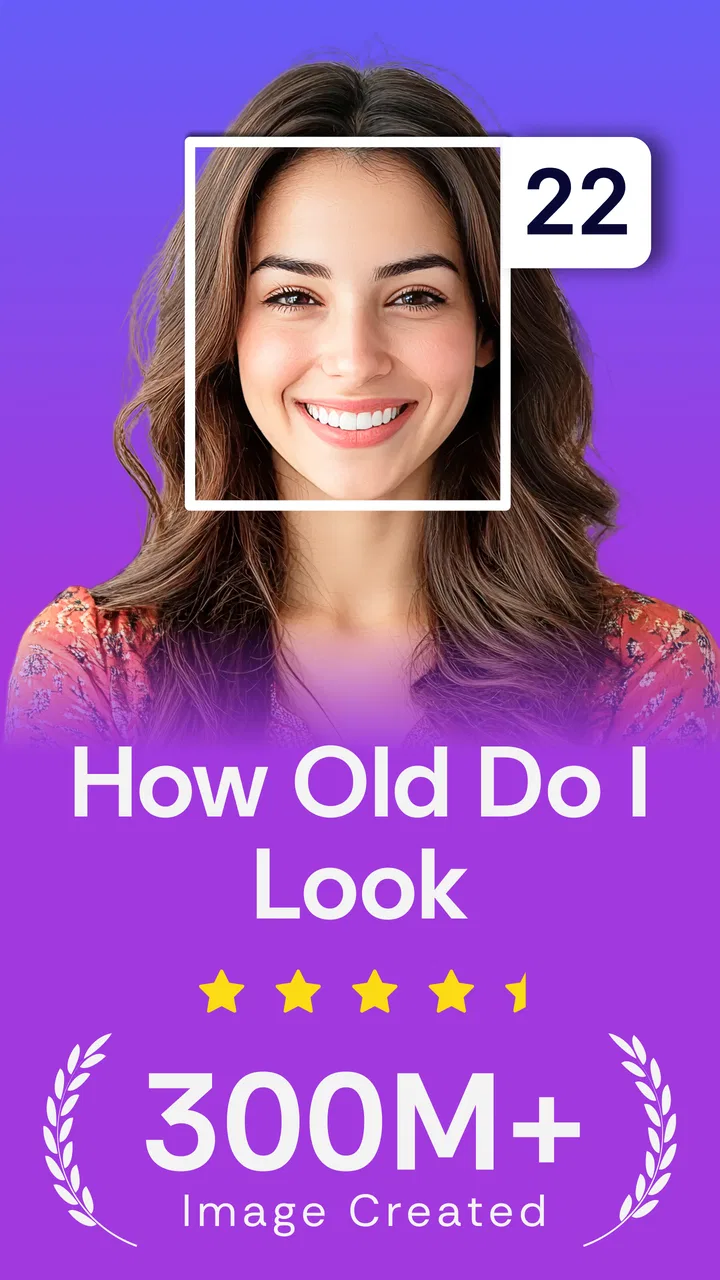
I approached How Old Do I Look expecting a quick beauty novelty, and that is exactly where it works best: as a playful way to experiment with your own photos rather than as a serious appearance tool. It combines age-guessing with creative photo effects, including face swapping, celebrity look-alike comparisons, cartoon treatments, anime styling, and sketch-like edits. My overall impression is that it is more entertaining than practical, but the variety gives it more staying power than a single-filter app.
The important distinction is that this is not an app I would use to make a real judgment about someone’s age or appearance. I would use it when I want a funny result to share privately with friends, compare different portraits, or turn an ordinary selfie into something visually different. That makes the experience easy to understand: the best results come from treating the app as a creative playground, not an authority.
What the app feels like in everyday use
The app comes from GlintTec Apps and sits in the beauty category, although its feature mix reaches into casual photo entertainment. The name sets up one expectation, but the broader collection of effects is what gives the app its identity. Instead of stopping after an age estimate, I can move toward a more exaggerated result, such as an anime-style image or a humorous sketch. That change of direction is useful when the first result is unconvincing or simply not amusing.
You May Also Like

 Blood Strike: 2.5 Anniversary
Blood Strike’s Loadouts Turn Every Drop Into a Tactical Gamble
A close look at Blood Strike’s custom loadouts: how fast access to signature weapons reshapes its battle royale rhythm, rewards preparation, and narrows the gap between fights.

 Pandora - Music & Podcasts
Pandora’s Music Is Easy to Start, but Harder to Recover
Pandora’s strength is its low-effort path from a seed to a station. Its weak spot is how much confidence it asks you to place in connection, setup, and quiet recovery.

 8 Ball Pool
 Is Built on Rivalries, Rematches, and Routine
A close look at the rivalries, rematches, shared routines, and unanswered safety questions that turn a quick pool match into a persistent mobile community.

 Samsung Music
’s Quiet Strength Is Playing What You Already Own
Its reach comes less from spectacle than from dependable access to a personal library. That simplicity is both the app’s strongest retention engine and its ceiling.

 AccuWeather: Weather Radar
AccuWeather Review: A Quick, Clear Forecast for Everyday Decisions
For everyday plans, the best forecast is the one you can understand quickly. AccuWeather makes rain timing, radar, and local conditions easy to act on, with a few trade-offs.

 Hill Climb Racing
Why Hill Climb Racing Still Turns Crashes Into One More Run
A tiny car, a bumpy hill and one more upgrade: Hill Climb Racing keeps resurfacing because its simple chaos makes every near-miss feel personal.
More From Our News Desk
View All News


The free entry point makes it easy to try without making a commitment. There are optional purchases ranging from $0.99 to $15.99 per item, so I would pay attention to any purchase prompt before continuing through the editing process. The app is suitable for Everyone, which fits its lighthearted presentation, although younger users should still be guided when an app offers optional paid items.
In practical terms, I see three main ways to use it. First, I can take a clear portrait and see how the age-oriented effect interprets it. Second, I can use the creative transformations for a more obviously fictional result. Third, I can compare several photos of myself under similar conditions and see how much the source image changes the outcome. That last use is more revealing than simply trying one selfie and accepting the result as meaningful.
Why the source photo matters more than people expect
A face-effect app is only as interesting as the image it receives. I get a better experience when the face is visible, reasonably well lit, and not hidden behind sunglasses, heavy shadows, or another person. A busy background can also make a playful edit feel less polished. These are not complicated requirements, but they make a noticeable difference when the app is trying to identify facial features or place an effect over them.
I would keep the first test simple: use a front-facing portrait with a neutral expression, then try a second photo with a smile. This creates a useful comparison without pretending that either result is objective. A tired expression, strong makeup, unusual lighting, or a low camera angle can all change the interpretation. The most interesting takeaway is often not the number or label itself, but how differently the same person can appear after a small change in the photo.
One practical tip is to crop the image before applying an effect if the face occupies only a small part of the frame. A closer portrait usually makes the result easier to inspect. On the other hand, I would avoid over-cropping if the selected effect needs to understand the overall head position. The right balance is a face that is prominent without being cut off.
The creative effects are the stronger side
The age-focused idea is the obvious hook, but I found the cartoon, anime, sketch, and look-alike concepts more useful for repeat visits. An age result can be amusing once or twice; an artistic transformation gives me a reason to try different expressions, hairstyles, and photos. The contrast between a realistic portrait and an exaggerated version also makes the app feel less judgmental, because the purpose becomes visual play rather than evaluation.
Face swapping is another feature that needs the right expectations. I would treat it as a novelty for casual images, not as a replacement for careful photo editing. The quality of a swap depends heavily on matching face angle, lighting, and expression. Two dramatically different portraits may produce an awkward result, but that awkwardness can be part of the joke. If I want a polished composite for a professional project, I would choose a dedicated editor with more control over masking, alignment, and retouching.
The celebrity look-alike idea is best understood as a loose resemblance game. A viewer may recognize a general similarity in face shape or styling without believing that the comparison is precise. That makes it suitable for conversation starters and group experiments. It is less suitable for anyone seeking a dependable identification or an explanation of why two faces resemble one another.
A realistic use case: a quick group experiment
Imagine a quiet evening with friends when everyone has a few portrait photos on their phone. I would ask each person to choose one relaxed image and one more formal image, then apply the same type of effect to both. The group can compare how expression, lighting, and framing influence the result. After that, the cartoon or anime options can turn the activity into something less personal and more openly silly.
This workflow is better than passing around one phone and trying random images without a plan. It creates a small, fair comparison and reduces the temptation to take one surprising output too seriously. I would also save only the images people are comfortable sharing. A funny edit can become uncomfortable if someone assumes it will be posted publicly without permission.
For a personal use case, the app can help me choose between profile-photo ideas. I might test a straightforward portrait, a smiling image, and a stylized version to see which one feels most natural. The app does not replace a proper photo editor, but it can quickly show which source images have enough clarity and visual interest to work with.
Where the experience becomes less convincing
The main weakness is built into the premise: an age estimate based on a photograph is highly sensitive to the photograph itself. That means a result can feel arbitrary even when the app is functioning normally. A different expression or a change in lighting may produce a noticeably different impression. I would not use the result to assess skincare, health, attractiveness, or anyone’s actual age.
There is also a risk of turning a harmless joke into an unwanted judgment. Some people enjoy seeing an exaggerated result, while others may find age-related comparisons uncomfortable. In a group, I would ask before applying the effect to someone else’s image. This is especially important when the result is being shared in a chat or social feed, where the original context can disappear.
The creative filters have their own trade-off. They can be more entertaining, but they may also move farther from the original face. If I want to recognize myself clearly, I would start with a lighter-looking treatment or a straightforward portrait effect. If I want a dramatic transformation, I would choose the anime or sketch direction and accept that resemblance may become secondary to style.
Another limitation is control. This app is built around quick results, so it is not the place I would go for detailed adjustment of color, skin texture, background, layers, or facial positioning. A dedicated editor is better when I need to correct a specific area or create a carefully composed image. The advantage here is speed and simplicity; the cost is precision.
How it compares with ordinary alternatives
Compared with a standard beauty editor, this app feels more experimental. A typical beauty tool is usually designed to improve a portrait through smoothing, reshaping, lighting adjustments, or makeup effects. How Old Do I Look takes a more playful route, using age-related interpretation and imaginative transformations as the central experience. I would pick the ordinary editor when I want a polished profile image, and this app when I want a surprising conversation piece.
Compared with a full photo-editing suite, it is much easier to approach but far less flexible. I do not need to learn a complicated workflow to try an anime treatment or a face swap. That convenience is valuable for casual users, especially when the goal is to produce something in a few minutes. The trade-off is that I have fewer ways to correct an imperfect result manually.
Compared with a single-purpose face-swap app, the broader collection is its advantage. If one effect feels weak, I can switch to a sketch, cartoon, or look-alike experiment instead of leaving immediately. The downside is that users who want only one highly refined function may prefer a specialized alternative. This is a variety-first app, not a precision-first app.
Tips for getting more useful results
I would begin with photos that have one clearly visible face. Group shots can be fun, but they make it harder to understand which part of the result comes from the chosen effect and which part comes from the image composition. Testing one face at a time also makes comparisons more consistent.
For a fair personal comparison, I would keep the camera angle and lighting similar across several images. If I change everything at once, the results become impossible to interpret. This is a small but useful habit: it turns a random novelty into a controlled experiment about how expressions and styling affect a portrait.
I would also separate private testing from sharing. First, inspect the result and decide whether it is flattering, funny, or simply strange. Only then choose whether it belongs in a message to a friend. This two-step approach prevents an accidental share and gives me a chance to remove images that do not feel comfortable.
When a transformation looks unnatural, I would not immediately assume the app has failed. I would try a closer crop, a more direct face angle, or a photo with less dramatic lighting. If the result still looks poor, that is a good sign to switch effects rather than repeatedly forcing the same one. The app’s variety is most useful when I treat each option as suited to a different kind of source image.
Who should try it, and who should skip it
I think it is a good fit for casual users who enjoy photo experiments, quick jokes, and stylized portraits. It is also suitable for someone who wants to explore several creative directions without installing separate apps for every effect. People who like comparing selfies or making playful images for a small circle of friends will probably get the most value from it.
I would be more cautious about recommending it to anyone who is sensitive about age or appearance. The central concept can be entertaining for one person and discouraging for another, especially when a result is taken literally. I would also steer professional photographers, social-media designers, and anyone needing exact retouching toward a more advanced editor.
Parents may appreciate that the content rating is Everyone, but that does not remove the need to discuss sharing and optional purchases. The app is free to start, while individual purchases can cost more depending on the item. I would let a child experiment only with an adult’s understanding of how images are being used and when a purchase screen appears.
Device fit, access, and overall polish
The app supports Android devices running version 8.0 or later, which covers a broad range of phones while still making the operating-system requirement worth checking before installation. Its current version is 7.0.42, and the product has been available since March 17, 2017. Those details suggest an established app rather than a brand-new experiment, although the actual experience will still depend on the phone, camera, and image quality.
Its audience is substantial, with over a million installs, and the average rating is 4.1 from around eleven thousand ratings. I read that as a sign of a generally enjoyable concept with room for mixed results, which matches my own judgment: the app can be fun quickly, but it is not consistently accurate or polished enough to replace specialist tools.
The review volume is also meaningful in context, with roughly four hundred sixty written reviews. I would not treat the rating as a guarantee that every effect will work equally well on every face. Instead, I see it as evidence that the basic idea has found an audience. The app earns that interest through variety, even though its central age-related result needs to be handled lightly.
My final recommendation
After using it as a creative photo toy, I would recommend How Old Do I Look to friends who want quick, low-pressure experiments rather than serious beauty analysis. Its strongest quality is the ability to move from an age-themed result into more imaginative territory when a straightforward portrait comparison stops being interesting. The cartoon, anime, sketch, face-swap, and look-alike directions give the app a wider personality than its short name suggests.
I would not recommend it as a reliable way to judge age, attractiveness, or the quality of someone’s appearance. The outcome depends too much on the selected photo, and the lack of detailed editing control limits its usefulness for polished work. A conventional beauty editor is better for careful retouching, while a professional photo editor is better for exact compositions.
For the right audience, though, those limitations are manageable. Use a clear portrait, compare results rather than believing them, try different effects when one looks awkward, and think before sharing someone else’s image. With that mindset, the app delivers what I want from a casual beauty download: a few minutes of experimentation, some genuinely funny possibilities, and enough variety to make the experience more than a one-time age guess.
FAQs for How Old Do I Look
01What is the main purpose of the How Old Do I Look app?
The How Old Do I Look app is designed to analyze facial features from a photo and estimate the age of the person. Using advanced algorithms, it provides a fun and often surprising prediction. Users enjoy seeing how the app interprets their age and comparing it to their actual age.
02How accurate is the age prediction in the How Old Do I Look app?
While the app uses sophisticated algorithms to estimate age, its predictions are meant for entertainment purposes and may not always be accurate. Factors like lighting, expression, and image quality can affect results. Users should view the age estimate as a fun feature rather than a precise measurement.
03Is my photo data safe with the How Old Do I Look app?
The app is committed to protecting user privacy. Photos are typically processed in real-time and not stored on servers. However, it’s essential to review the app's privacy policy to understand how data is handled. Users should ensure they are comfortable with the app's practices before uploading photos.
04Can I use the How Old Do I Look app on both Android and iOS devices?
Yes, the How Old Do I Look app is available for both Android and iOS platforms. Users can download it from the Google Play Store or the Apple App Store, ensuring compatibility with a wide range of smartphones. Always check for the latest version to access new features and improvements.
05What features does the How Old Do I Look app offer besides age estimation?
In addition to estimating age, the app often includes features like gender prediction, emotion detection, and the ability to share results on social media. Some versions may offer filters or effects to enhance photos. Users enjoy exploring these features to add a layer of interactivity and fun.
Pros
- Accurate age predictions for diverse faces.
- Easy-to-use interface with quick results.
- Fun features for sharing on social media.
- Minimal ads enhance user experience.
- Works offline for convenient use.
Cons
- Occasional errors with unusual lighting.
- Limited editing options for photos.
- No option to save age history.
- Requires access to photo gallery.
- No support for older device models.

How Old Do I Look
Gallery